- The TSCA section 8(a)(7) rule requires a one-time report from anyone who made or imported PFAS, including in articles, in any year from 2011 to 2022.
- Under EPA's final rule of 13 April 2026, reporting opens on 31 January 2027, or earlier if EPA finalises its rule narrowing the scope first.
- Most reporters then have six months. Small businesses reporting only as article importers have twelve.
- EPA has proposed exempting PFAS in imported articles and at 0.1% or less. Until that is final, the rule applies as written.
The Toxic Substances Control Act (TSCA) section 8(a)(7) rule asks for a single, backward-looking report on per- and polyfluoroalkyl substances (PFAS). It covers anyone who manufactured, including imported, PFAS for a commercial purpose in any year from 2011 to 2022. Under the rule as written, that includes PFAS contained in imported articles.
- Final ruleOne-time PFAS reporting rule issued.
- Narrowing proposedExemptions for imported articles and 0.1% or less proposed.
- Start movedReporting opens by 31 January 2027.
- Window opensAt the latest; six months for most reporters.
The new start date
The submission period has moved several times. The latest change is a final rule published on 13 April 2026. It sets the start of reporting as the earlier of two dates:
- 31 January 2027; or
- 60 days after EPA's forthcoming final rule on the substantive changes takes effect.
Once the window opens, most reporters have six months to submit. Small businesses that report only as importers of articles have twelve months. Older dates, including 13 October 2026, no longer apply, even where they still appear on some pages.
What EPA proposed to change
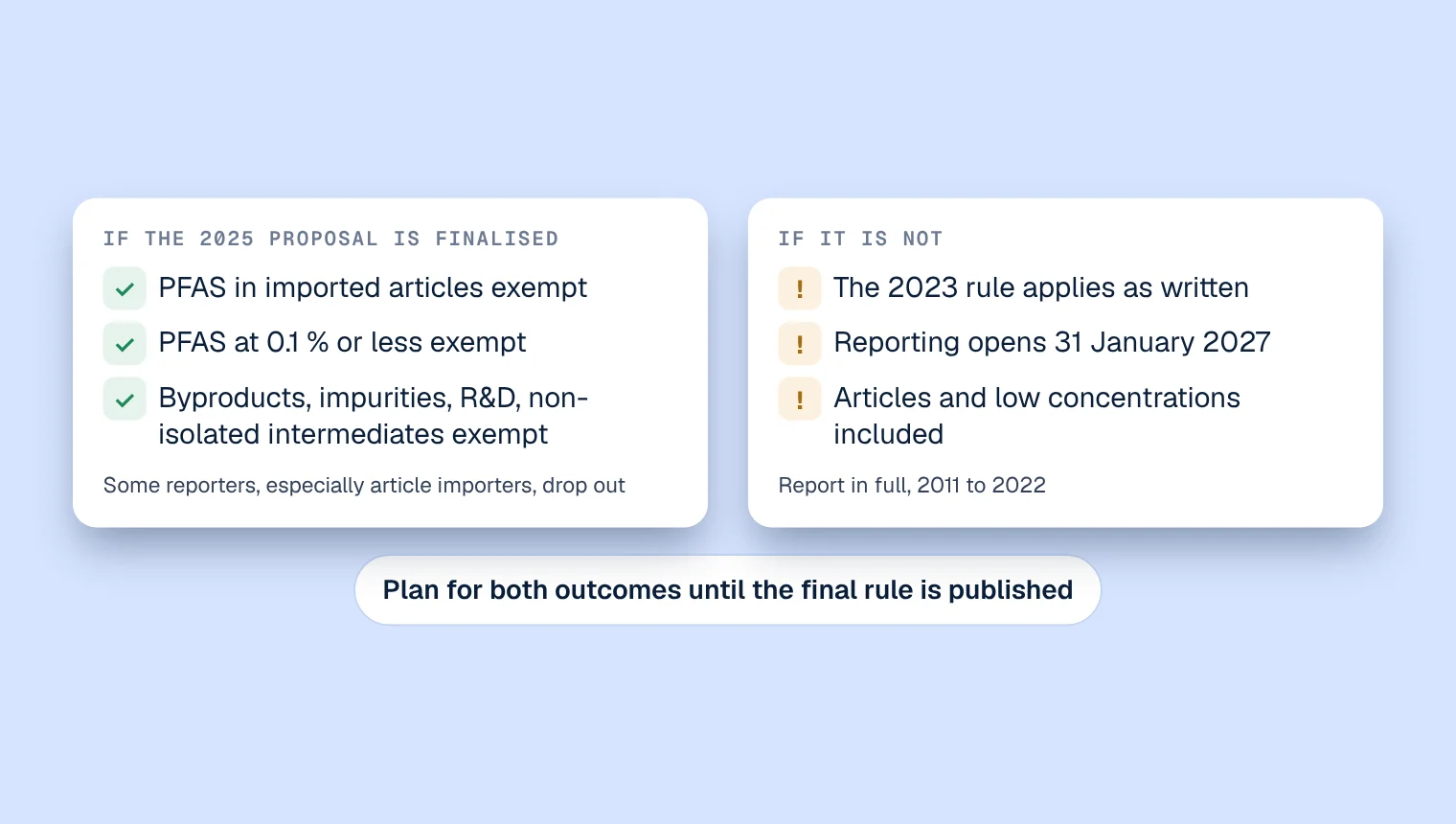
In November 2025 EPA proposed narrowing the rule. The proposal would exempt PFAS in imported articles, PFAS at 0.1% or less, byproducts, impurities, research and development chemicals and non-isolated intermediates. Comments closed on 29 December 2025. As of mid-October 2026 the final rule had not been published, so the 2023 rule applies as written until it is.
That leaves companies planning for two possible outcomes. If the narrowing is finalised, some reporters, especially article importers, may drop out. If it is not, they report in full from 31 January 2027.
What to do now
- Find the PFAS. List the substances, mixtures and articles you made or imported from 2011 to 2022 that may contain PFAS under the rule's structural definition.
- Collect what is known or reasonably ascertainable. The rule asks for information within that standard, so search your own records and ask suppliers now, while staff and records are still available.
- Keep the working. Record what you searched and what you found, so you can show how each answer was reached.
- Watch for the final narrowing rule. It could start the window earlier than 31 January 2027, because the start is 60 days after that rule takes effect if that comes first.
State rules are separate
TSCA reporting does not replace state PFAS rules. Minnesota, for example, required manufacturers of products with intentionally added PFAS sold in the state to report by 15 September 2026, or 14 December 2026 with an extension, and then every 1 February. Each rule uses its own definition of PFAS and its own scope.
Sources
General information, not legal advice. Checked against the official sources above on 15 October 2026. Rules change: for your own products, ask for a spot-check.