- Since 31 May 2025, surface disinfectants and surface sanitizers are regulated as biocides under Health Canada's Biocides Regulations.
- A new product needs a biocide market authorization, with an 8-digit number, before it can be imported, sold or advertised.
- Existing DIN disinfectants and PCPA-registered surface sanitizers must transition by 31 May 2029; Health Canada recommends applying by 16 January 2029.
- Surface sanitizers for food premises have until 31 May 2031. Hand sanitizers are not biocides.
Until 2025, a hard-surface disinfectant sold in Canada needed a Drug Identification Number (DIN) under the Food and Drug Regulations, while many surface sanitizers were registered as pest control products. Health Canada's Biocides Regulations replaced that split. Since 31 May 2025, both are "biocides", and a new product needs a biocide market authorization before it can be imported, sold or advertised in Canada.
- Regulations in forceNew surface disinfectants and sanitizers need a biocide authorization.
- Recommended dateApply for the transition of existing products.
- Transition endsDINs and PCP registrations for these products end.
- Food premisesSanitizers for food premises authorized.
What counts as a biocide
Biocides are products used to destroy, inactivate or control micro-organisms on non-living, non-liquid surfaces: the disinfectants and sanitizers used on counters, floors and equipment. Products for air or water, contact lenses, invasive medical devices, or used only on the surface of food are excluded. Hand sanitizers are applied to skin and fall outside the regulations: those whose only medicinal ingredient is ethanol or isopropanol are natural health products, and others are drugs.
Routes to an authorization
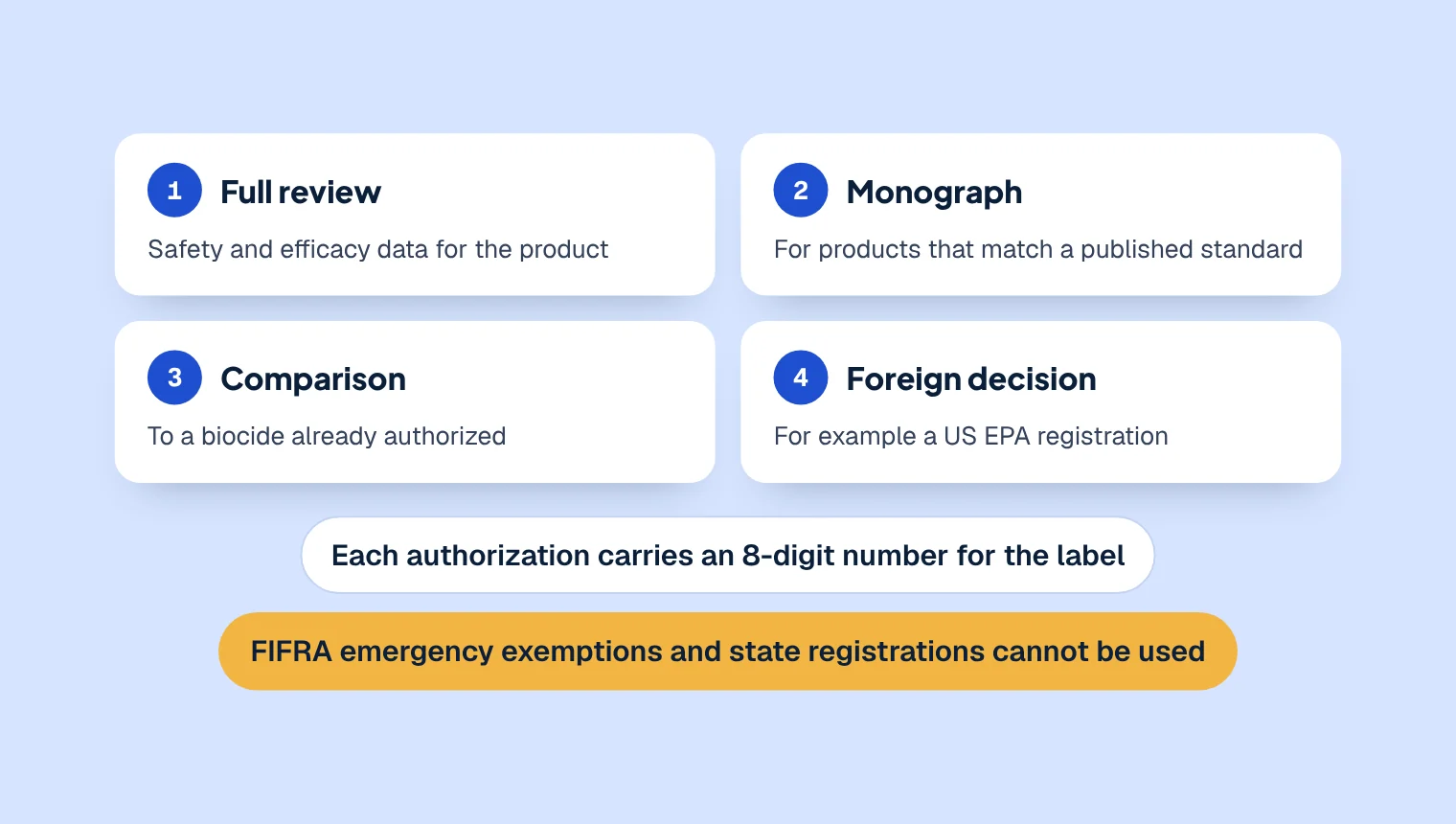
Health Canada offers several application pathways:
- a full review of the product's safety and efficacy data;
- a monograph, for products that match a published standard;
- comparison to a biocide that is already authorized;
- use of a foreign decision, which can rely on a US EPA registration. Emergency exemptions and state-specific registrations under FIFRA cannot be used.
Each authorization carries an 8-digit identification number, which goes on the label.
Products already on the market
Existing products have a transition period. Disinfectants with a DIN and surface sanitizers registered under the Pest Control Products Act must move to a biocide authorization by 31 May 2029; after that date their DINs and registrations are no longer valid for these products. Health Canada recommends submitting transition applications by 16 January 2029. Disinfectants keep their existing 8-digit number; sanitizers receive a new one. Surface sanitizers for food premises have until 31 May 2031.
What does not change
Other pest control products, such as insect repellents, material and wood preservatives and pool and spa products, stay with the Pest Control Products Act and PMRA registration. Biocides and pest control products are also excluded from the Hazardous Products Act, so WHMIS supplier SDS and label duties do not apply to them; their hazard information follows the authorization and the product label.
Planning the transition
For a portfolio of existing products, the work is mostly evidence and labels: confirming which pathway fits each product, assembling the data or the foreign decision, and updating labels with the new number. Starting well before 2029 avoids a queue at the end.
Sources
General information, not legal advice. Checked against the official sources above on 15 October 2026. Rules change: for your own products, ask for a spot-check.